I sat inside a CSC prisoner transport vehicle. I am more determined than ever to see things change.

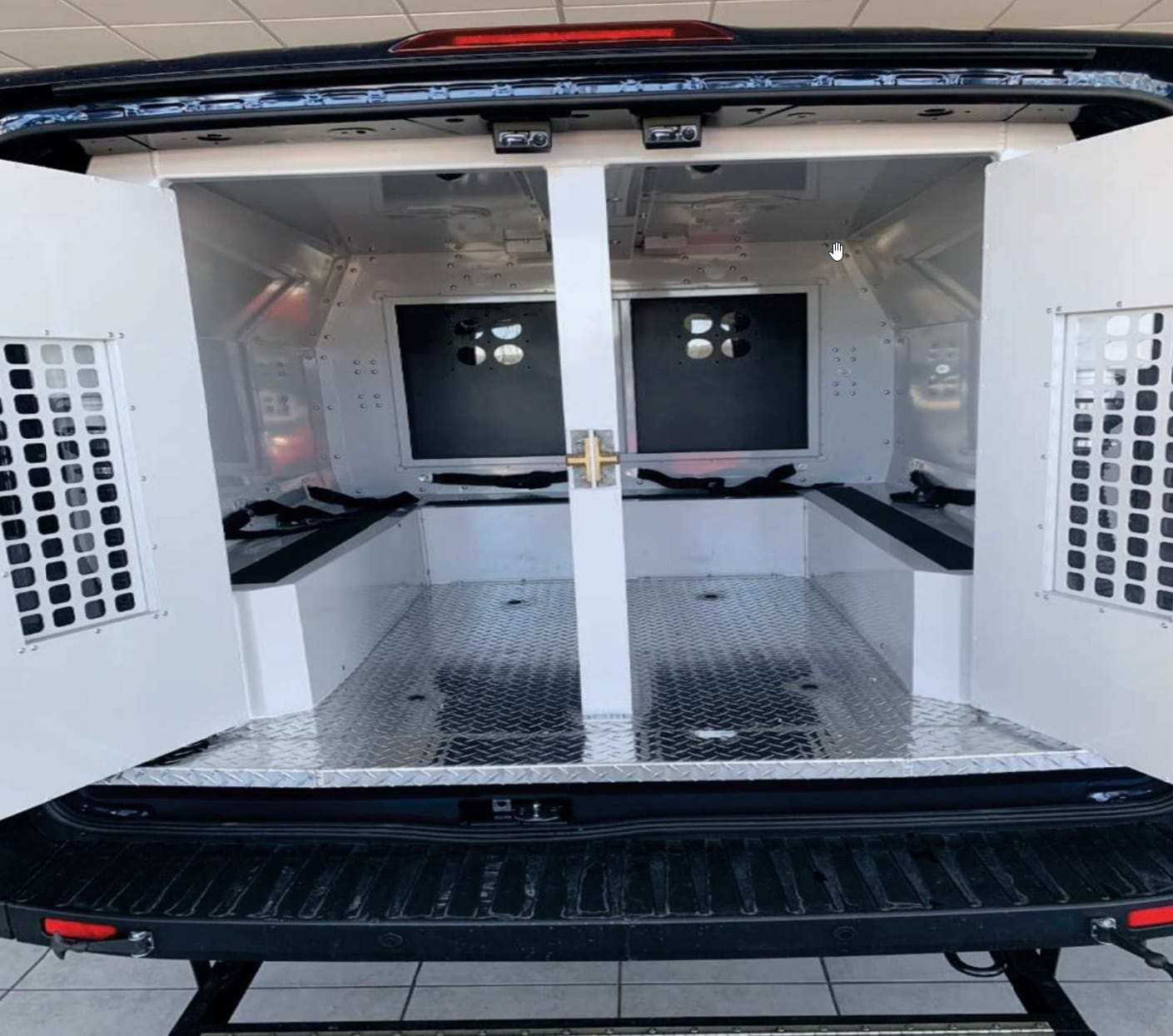
On October 29, I had the opportunity to inspect a Correctional Service Canada security escort vehicle in Kingston and sit inside its prisoner compartment.
A sincere thank you to CSC and the employees who welcomed me, showed me the vehicle and took the time to answer my questions. That openness matters. I appreciated the opportunity to move beyond photographs and experience the space firsthand.
I left more convinced than ever that we need a different approach to prisoner transportation.
A different approach to single-person transport
For transporting one person, I believe a properly assessed SUV with a secure single-person compartment, forward-facing seating and a three-point seatbelt should be the default, unless a documented operational need requires another configuration. Wherever possible, that approach should preserve the original manufacturer’s seating and restraint systems.
There is a fundamental difference between transporting someone in a vehicle equipped with an original manufacturer (OEM) seat, designed as part of the vehicle's occupant-protection system, and placing them inside an aftermarket metal cage with seating that has not been demonstrated to be crashworthy. In a collision, a person inside such a cage could suffer catastrophic head injuries from striking the hard metal walls, particularly when restrained by a lap belt that does not secure the upper body.
What does “Transport Canada compliant” actually mean?
Specialist outfitters can turn cargo vans into prisoner transport vehicles by installing secure inserts. In Canada, manufacturers certify that the finished vehicle meets the safety standards that apply to it, with Transport Canada oversight.
That certification is not, by itself, proof that the completed prisoner compartment has been crash-tested or that its occupants are adequately protected. The question is how the metal bench, lap belt and surrounding partitions work together in a collision, and what evidence demonstrates that protection.
Compliance is a necessary baseline. It is not a complete answer to the question of occupant protection.
During my visit, I asked whether crash testing or simulation had been performed. I was told no and was directed to the manufacturer for any additional information. That describes the answer I received; it does not establish that no relevant testing exists anywhere.
So far, CSC has not provided me with crash-test results or an assessment demonstrating how the complete prisoner compartment protects its occupants during a collision. I would welcome that evidence.
A lap belt does not make a dangerous compartment safe
CSC has previously told me that, since 2024, newly acquired security escort vehicles must have non-retractable, two-point lap belts. Older vehicles supplied without belts remain in service until replacement. I do not yet have a verified count of how many operational vehicles have prisoner seatbelts today.
The vehicle I visited had lap belts, side-facing formed-metal benches, upright metal backrests and hard surrounding partitions.
A two-point lap belt restrains the pelvis. It does not provide a shoulder restraint for the upper torso. In that environment, the movement of a person’s torso and head during a collision deserves serious scrutiny.
Even if a belt meets its applicable standard and its anchorages meet their strength requirements, that alone does not answer how the seating position, belt geometry and surrounding metal surfaces affect injury risk.
My concern is straightforward: what protects the person’s head and upper body from striking the hard metal interior during a crash?
That question should be central to procurement for an organization responsible for the safety of people in its custody.
What CSC should do next
I want CSC to make the safety and well-being of people in its custody a central requirement of transport vehicle design and procurement. That means actively pursuing alternatives that combine secure custody with proper passenger seating, effective restraints, protection from injury in a crash, and humane travelling conditions.
During my visit, the CSC employees I spoke with told me that they care about the safety of the people in their custody. I genuinely appreciated hearing that. Despite my serious concerns about the vehicles, those conversations gave me hope that meaningful improvements are possible.
I recognize that CSC has legitimate security and operational responsibilities. I am not asking CSC to compromise those responsibilities. I am asking it to explore designs that meet those needs while offering substantially better protection and more humane conditions for the people being transported.
Human dignity, prisoner safety and the safety of CSC employees do not have to be competing priorities. They should be requirements of the same design.
I am grateful that CSC opened the door to this conversation and took the time to show me its vehicles. I hope the concern for prisoner safety expressed during our meeting will translate into a willingness to reconsider existing designs, evaluate safer alternatives and make occupant protection a central consideration in future procurement decisions.
I did not travel to Kingston looking for someone to blame. I went because I believe these vehicles can be improved, and because I want to see that improvement happen.
Keeping someone in custody should also mean protecting them on the road.