Prisoner Transport Vehicles
This page documents publicly available information about prisoner transport vehicles used by the Correctional Service of Canada (CSC). It brings together official reports, publicly available photographs, policy information, and documented changes to help preserve a historical record of these vehicles and their evolution over time.
It will be updated as additional information becomes available.
Why document these vehicles?
Prisoner transport vehicles are an essential part of Canada's correctional system, yet relatively little public information exists regarding their design, crashworthiness, safety features, or evolution over time.
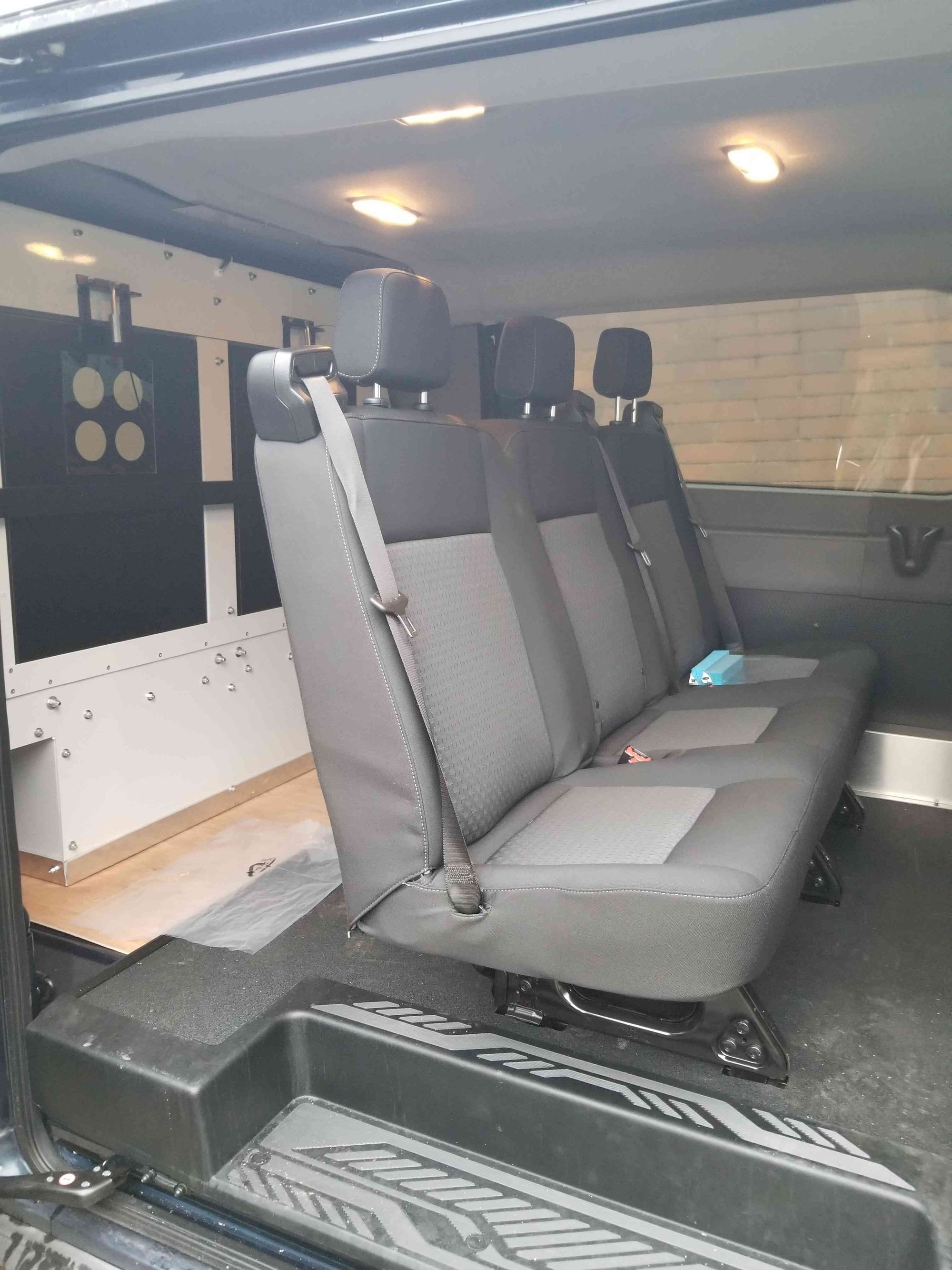
Over the past decade, the Office of the Correctional Investigator (OCI) has repeatedly raised concerns regarding some CSC escort vehicles, particularly modified commercial minivans fitted with welded prisoner transport compartments. More recently, CSC has begun replacing portions of its fleet with newer escort vehicles equipped with seatbelts.
This page documents what is publicly known.
Reported Experiences During Transport
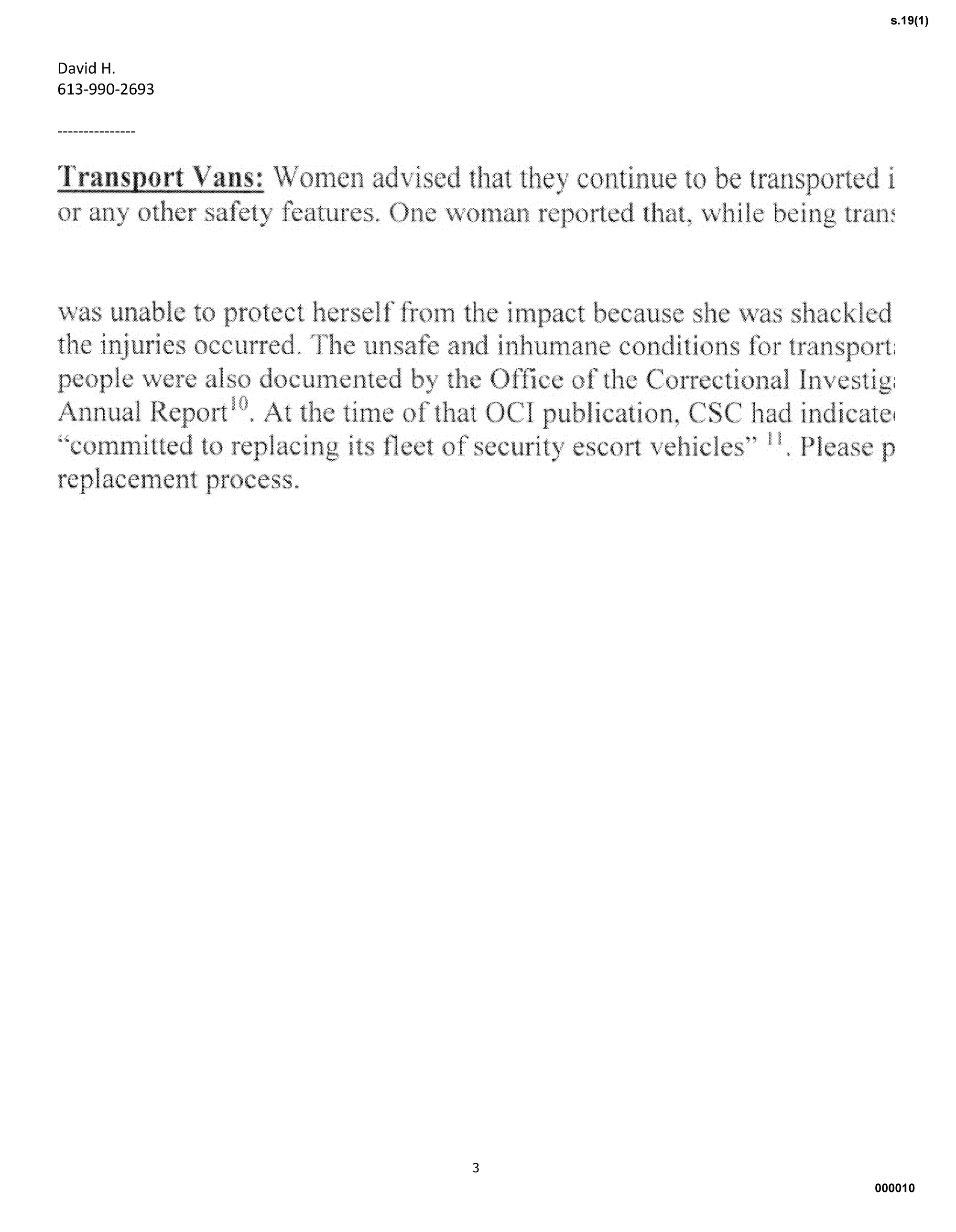
Internal correspondence obtained through Access to Information includes a case summary describing concerns raised by incarcerated women regarding CSC prison escort vehicles.
According to the document, women reported being transported without seatbelts or other safety features. One individual stated that she was unable to protect herself during a collision because she was shackled when the impact occurred.
The correspondence further notes that these concerns had previously been documented by the Office of the Correctional Investigator, and references CSC's commitment to replace its escort vehicle fleet.
"Women advised that they continue to be transported in [escort vans] without seatbelts or any other safety features. One woman reported that, while being transported, she was unable to protect herself from the impact because she was shackled when the injuries occurred."
Modified Dodge Grand Caravan Escort Vehicle
(Approximate period of use: at least 2016–2025)
This modified Dodge Grand Caravan became one of the most frequently discussed prisoner transport vehicles in public reports concerning CSC transport practices.
- welded steel prisoner compartment
- no seatbelts
- modified commercial minivan
- cited by Ivan Zinger as not engineered or crash-tested in this configuration
- New Brunswick collision referenced as an example of potential consequences
Documented photographs
Office of the Correctional Investigator (2016–2017)
In the 2016–2017 Annual Report, Correctional Investigator Ivan Zinger described sitting inside one of CSC's modified escort vehicles during an institutional visit. He reported that the welded prisoner compartment lacked basic safety features, including seatbelts, and expressed concern that the vehicles had never been engineered or crash-tested in this configuration. The report also referenced the 2012 New Brunswick prisoner transport collision as an example of the potential consequences of this design.
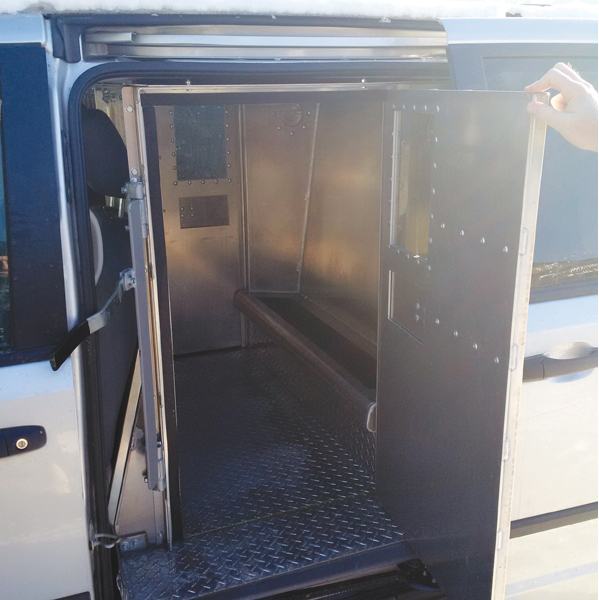
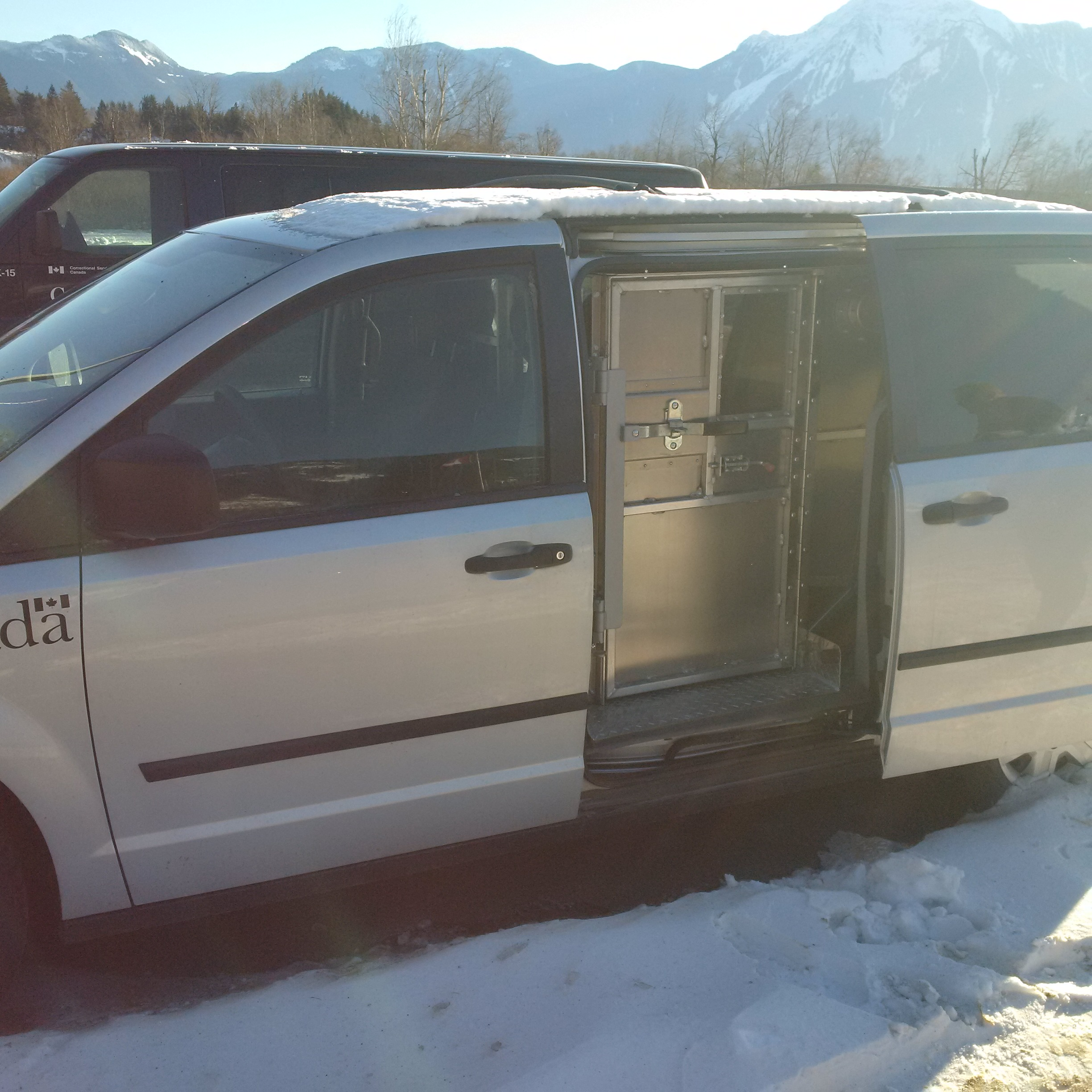
Public photographs (April 11, 2025)
The following photographs were taken at St. Mary's Hospital (now WRHN) in Kitchener, Ontario, on April 11, 2025. They document a CSC modified Dodge Grand Caravan escort vehicle in operational use.
These photographs demonstrate that this style of modified escort vehicle remained in operational use in April 2025, approximately eight years after concerns regarding its design were raised in the Office of the Correctional Investigator's 2016–2017 Annual Report.
The photographs are reproduced with the permission of the photographer.
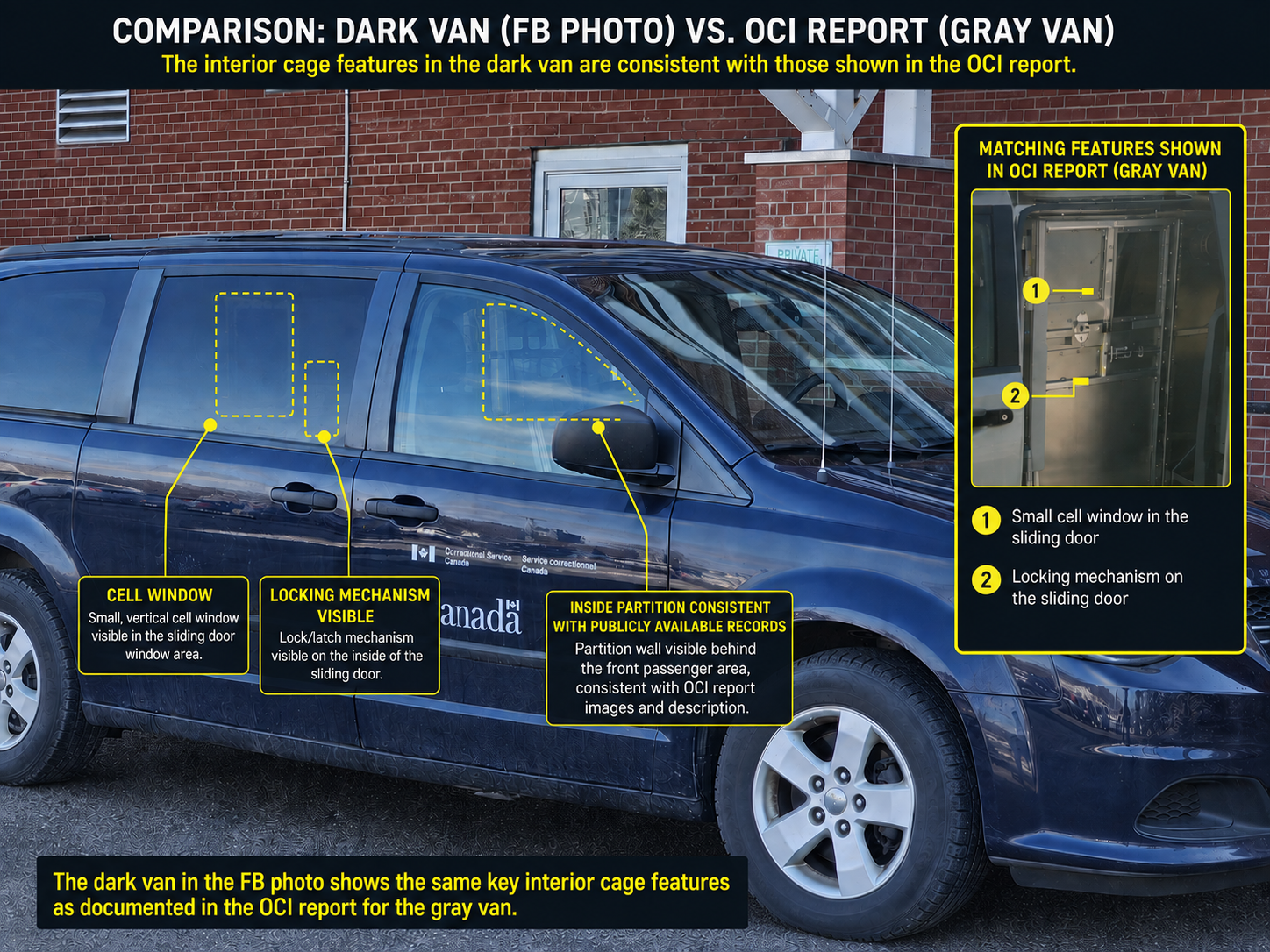



Interior photographs released by CSC through Access to Information
This photograph was released by the Correctional Service of Canada in response to an Access to Information request (A2021-00026). It shows the interior of a modified escort vehicle used by CSC.
These photographs provide additional documentation of the interior construction of the modified escort vehicle and complement the photographs published by the Office of the Correctional Investigator.
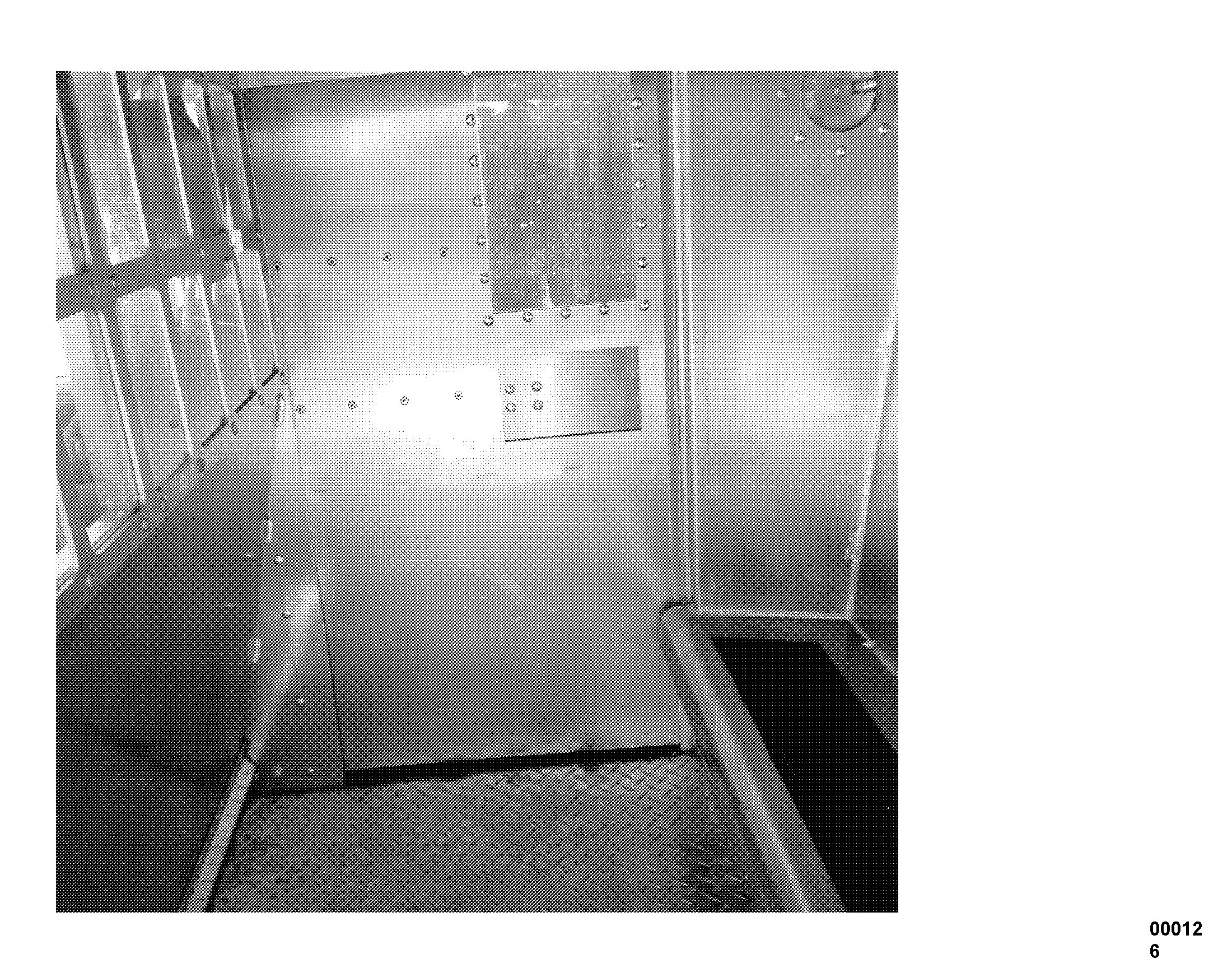
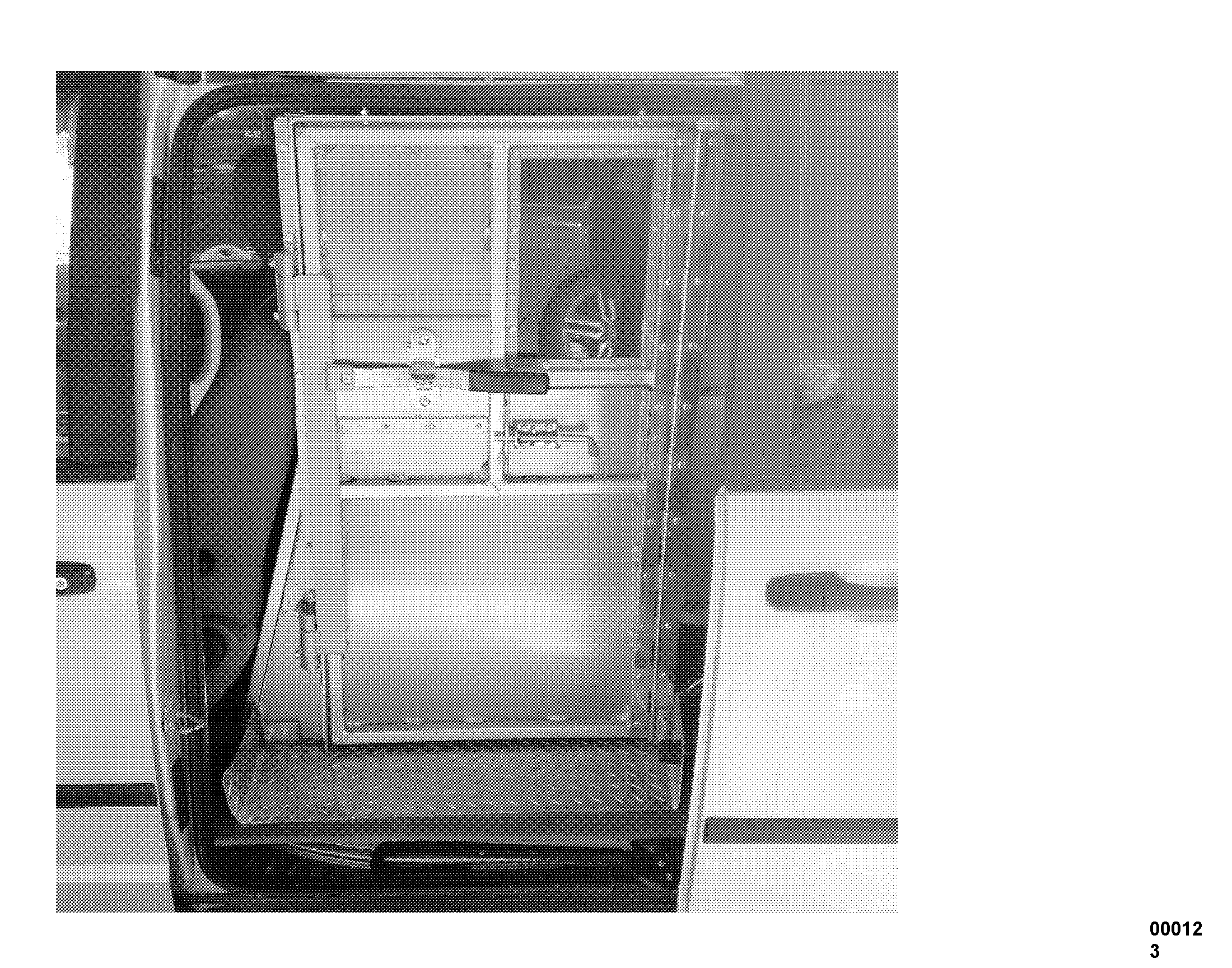
Source: Correctional Service Canada, Access to Information Release A2021-00026.
Prisoner transport vehicle adapted for disabilities
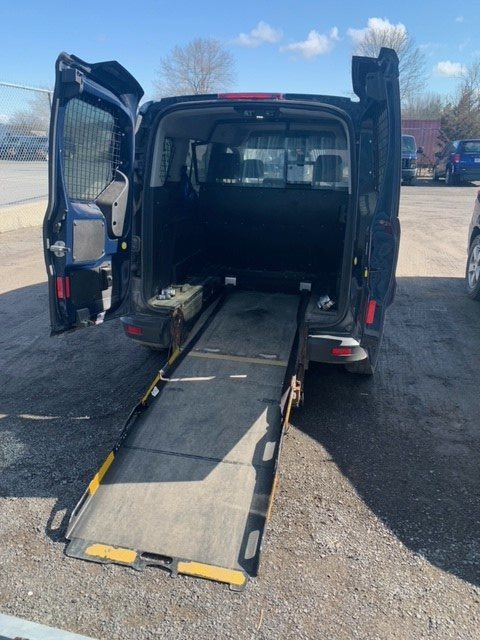
Reproduced from the Correctional Investigator's Annual Report 2021–2022. The vehicle is equipped with a partition and mesh separating the driver and passenger compartments, rather than a fully enclosed steel prisoner compartment. It is also equipped with a wheelchair ramp to accommodate individuals with mobility impairments.
Source: Office of the Correctional Investigator of Canada, Annual Report 2021-2022.
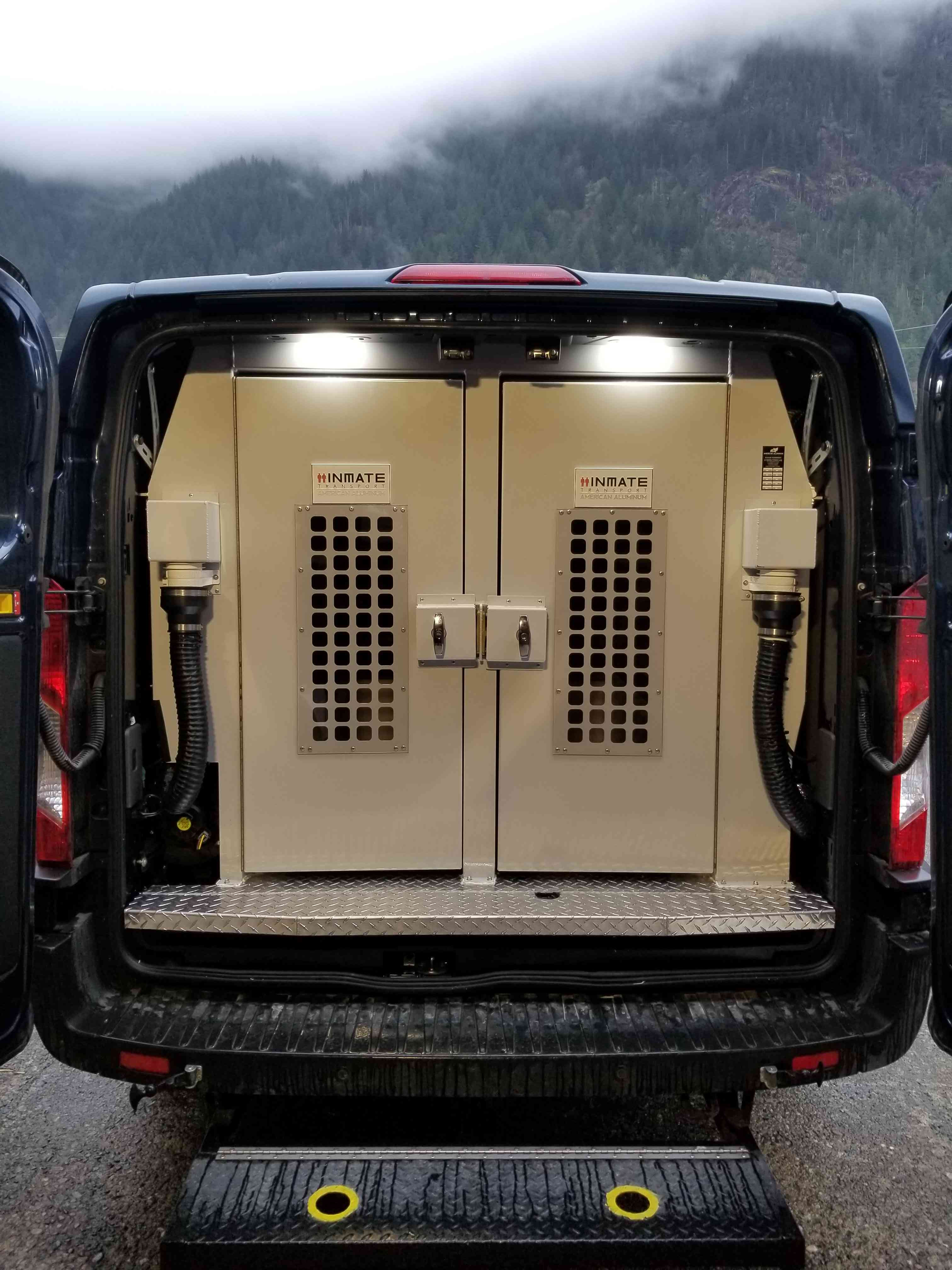
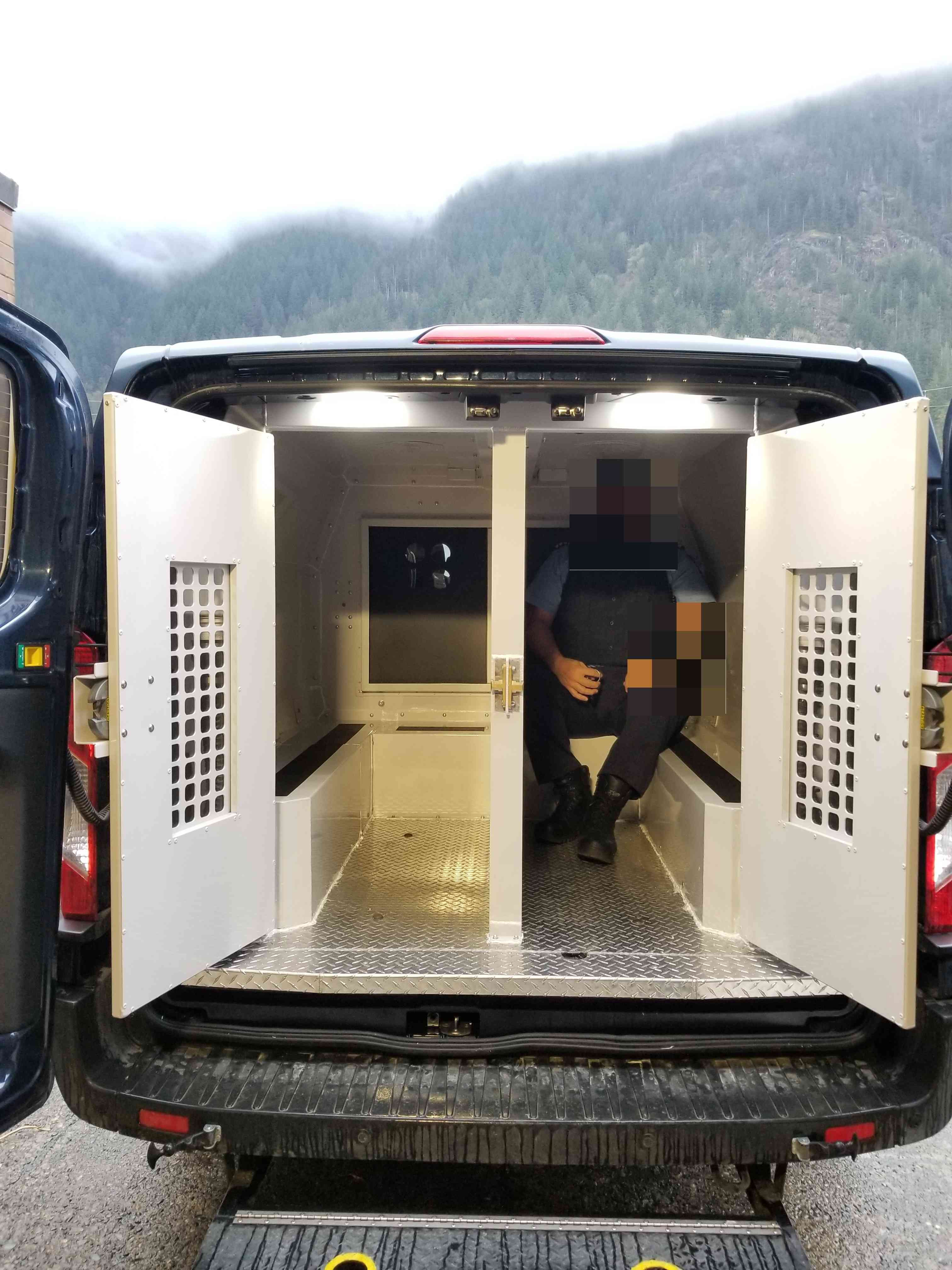
T80R modified Ford Transit van
Vehicle Specifications
Procurement documents obtained through Access to Information provide detailed specifications for the T80R prisoner transport insert used in CSC escort vehicles. These records describe the construction, dimensions, and equipment of the prisoner compartment.
In 2009, Correctional Service Canada (CSC) prepared a Statement of Requirement for the manufacture and installation of a Mini Van Prisoner Insert designed for commercial minivans.
The specification describes a fully enclosed aluminum prisoner compartment intended to maximize available space while providing a secure transport environment.
The released procurement specification describes the construction and equipment of the prisoner insert. Among the listed requirements are:
- Fully enclosed aluminum prisoner insert.
- Welded aluminum construction with sealed floor.
- Fixed aluminum bench seat.
- Bench seat dimensions: 52 × 10.375 inches (132 × 26 cm).
- Distance from the bench seat to the ceiling: 37.375 inches (95 cm).
- Two recessed interior dome lights.
- Two heating outlets and two air-conditioning outlets.
- Variable-speed ventilation fan with tamper-resistant cover.
- Hinged access doors with Lexan viewing windows.
- A tinted Lexan observation window separating the driver compartment from the prisoner compartment, allowing visibility from the driver's compartment into the prisoner compartment only.
The specification does not mention passenger restraint systems, seatbelts, airbags, padding, or crashworthiness requirements.
Internal procurement correspondence indicates the completed vehicle cost approximately $72,458.
Internal Correspondence Regarding Seatbelts
Internal correspondence obtained through Access to Information shows that, in 2019, the Office of the Correctional Investigator (OCI) questioned CSC regarding the absence of seatbelts in these prisoner transport inserts.
Following discussions between the OCI and CSC Technical Services, the OCI requested the rationale for why seatbelts were not part of the standard safety equipment, asking:
"...we had also discussed the point about seatbelts in our initial phone conversation, and I seem to recall that you had committed to consult with CSC Security and get back to us on the specific reasons/rationale for why they are not part of standard safety equipment."
CSC subsequently replied:
"As for the seat belts, I have consulted with the Security Branch; we will prepare a proper response to your query by 31 Oct 2019."
The records released under Access to Information do not include the promised 2019 response explaining why seatbelts were not part of the standard safety equipment.
In its 2021–2022 response to the Office of the Correctional Investigator, CSC stated that it had begun modernizing its escort fleet with redesigned transport inserts, improved heating and ventilation, cameras, longer L-shaped benches, and that it intended to seek confirmation from Transport Canada that the vehicles complied with the Canadian Motor Vehicle Safety Standards. However, the publicly available records reviewed for this article do not explain the original engineering or policy rationale for omitting occupant restraint systems from earlier escort vehicle designs.
In its response to Recommendation of the Office of the Correctional Investigator's 2021–2022 Annual Report, Correctional Service Canada stated that it had begun replacing its escort fleet with redesigned vehicles featuring improved heating and air conditioning, cameras, longer L-shaped benches, emergency exits, and that it intended to seek confirmation from Transport Canada that the vehicles complied with the Canadian Motor Vehicle Safety Standards. However, CSC's response did not directly address the Office of the Correctional Investigator's recommendation regarding seatbelts. Instead, it described broader fleet modernization measures without explaining the original rationale for the absence of seatbelts in earlier escort vehicle designs or why occupant restraint systems were not initially included.